Age-related macular degeneration research highlighted by Fight for Sight.

FFS LOGO smallFight for Sight have posted a 2 minute video on their website – highlighting an ongoing study in the Stewart lab that examines the contribution of hydroxyapatite in the formation of sub-retinal pigment epithelial deposits. These deposits are a hallmark of age-related maciular degeneration, a common cause of blindness in older individuals. The video which features Dr Stewart and Dr Imre Lengyel (from the UCL Institute of Ophthalmology) was filmed during a recent visit to the charity.

The article and a link to the video can be found here: http://www.fightforsight.org.uk/news-and-views/articles/science-blog/overview-drs-imre-lengyel-and-alan-stewart-on-amd/
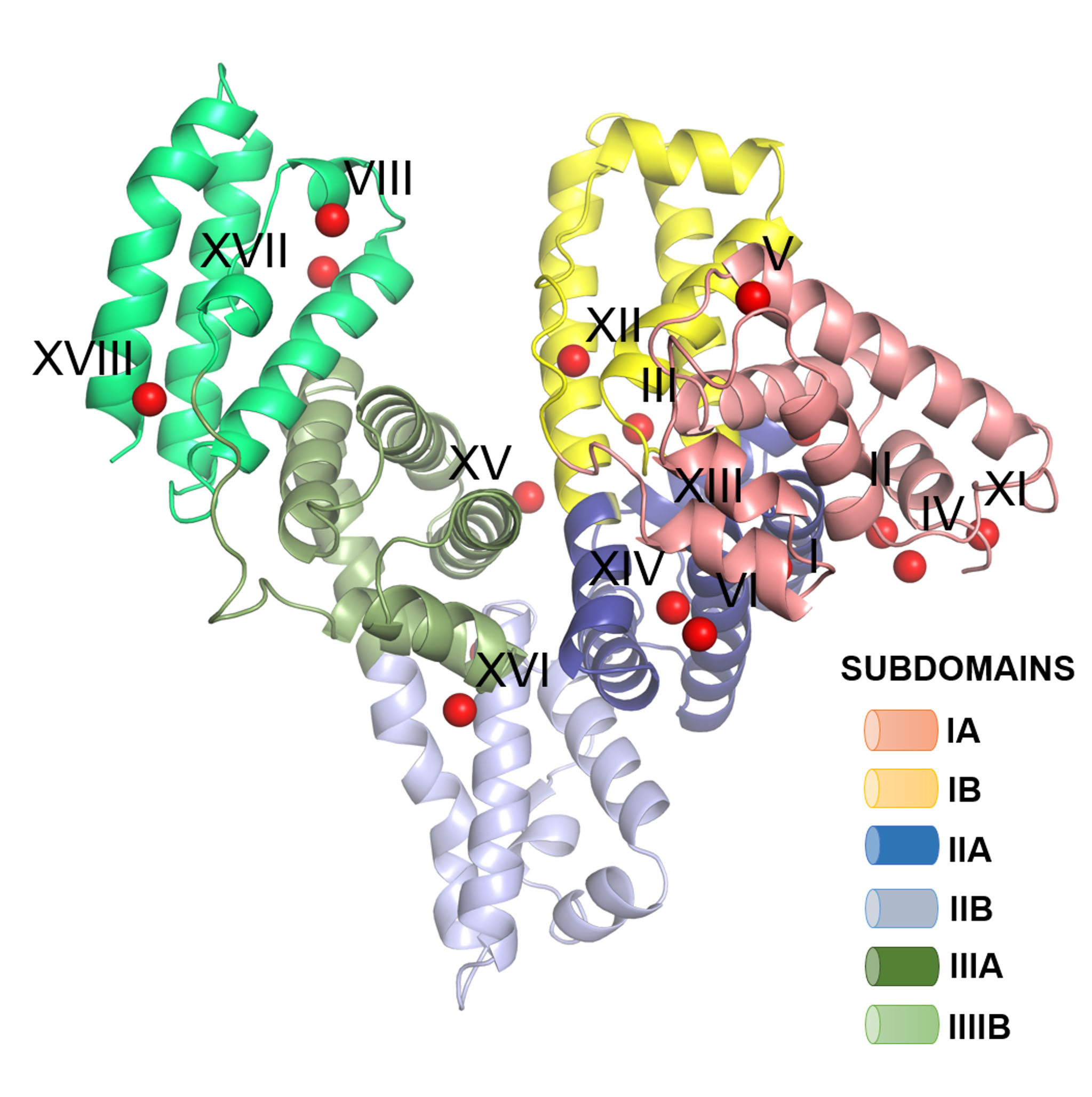

Circulatory zinc transport occurs at distinct interdomain sites on mammalian albumins

Created with GIMP
Locations of zinc-binding sites on equine serum albumin.

Zinc is an essential nutrient in the body that is required for virtually all biological processes, therefore its homeostasis and trafficking is of fundamental interest. Serum albumin is the major carrier of Zn2+ in the blood and is required for its systemic distribution. In collaboration with Prof. Wladek Minor (University of Virginia), Dr Maksymilian Chruszcz (University of South Carolina) and Dr Claudia Blindauer (University of Warwick), the Stewart lab present the first crystal structures of human serum albumin (HSA) and equine serum albumin (ESA) in complex with Zn2+. The structures allow unambiguous identification of the major zinc binding site on these two albumins, as well as several further, weaker zinc binding sites. Furthermore, analysis of Zn2+ binding to HSA and ESA proved the presence of secondary sites with 20-50-fold weaker affinities, which may be important under certain physiological conditions. Collectively, these findings are critical to our understanding of the role serum albumin plays in circulatory Zn2+ handling and cellular delivery. The new findings are published in the open-access journal, Chemical Science. Full text of the article is available here.

Visit to Fight for Sight HQ

Dr Alan Stewart visited Fight for Sight yesterday, together with Dr Imre Lengyel (UCL Institute of Ophthalmology) to update the charity on the recent progress made on their Fight for Sight project grant.

They were excited to meet the FFS team who extended a warm welcome and gave insight into the great work that the charity does. In addition to fundraising and funding new research, the charity is committed to raising awareness of issues surrounding visual impairment and informing on new developments in the field. Drs Stewart and Lengyel are especially grateful to Dolores Conroy, Fight for Sight’s Director of Research, for the invitation to attend.

Prize for best honours research dissertation

The Pitt lab would like to congratulate Lara Beaumont on receiving the Dean of Medicine prize and the Professor Andrew C. Riches prize for the best lab based honours research project.

Lara was a recipient of the Wolfson Foundation Intercalated degree award when she joined our group to investigate how zinc regulates calcium release in heart failure. It was a real pleasure to have Lara in the lab and we wish her every success for the future.


Chrysalis- An artistic interpretation of pursuing scientific research

Dr Pitt took part in the Chrysalis project; an artistic interpretation of pursuing scientific research. This project was funded by the Biochemical Society Diversity in Science Fund and the Wellcome Trust’s Institutional Strategic Support Fund.

Sophie KnightProfessional local artist Sophie McKay Knight met both young and established female researchers at the University of St Andrews to examine how creativity and imagination are required, as well as integrity and precision when pursuing scientific research. Sophie visited our lab to find out about the day-to-day life of a scientist and to learn more about our current research. The conversations the group had with Sophie and some of current data were interpreted into artwork which formed part of an exhibition entitled Elements, 23 March – 30 April 2016 at the Byre Theatre, St Andrews.

EU COST Action Meeting (Zinc-Net): Dietary supplements vs food biofortification and the gut microbiome, Sofia, Bulgaria.

zinc-netDr Alan Stewart would like to thank the organisers (Profs. Nicky Lowe, Fernando Lidon and Radostina Alexandrova) of the EU COST Action Meeting (Zinc-Net TD1304) on dietary supplements vs food biofortification and the gut microbiome, which took place on the 22nd/23rd March 2016 in Sofia, Bulgaria. Dr Stewart presented his work relating to the interplay between fatty acids and plasma zinc status and the implications of this dynamic for zinc bioavailability. In addition, he acted as rapporteur (together with Dr José C. Ramalho, Universidade de Lisboa) for the third scientific session on “Zinc Biofortification”.

Biophysical Society Annual Meeting 2016

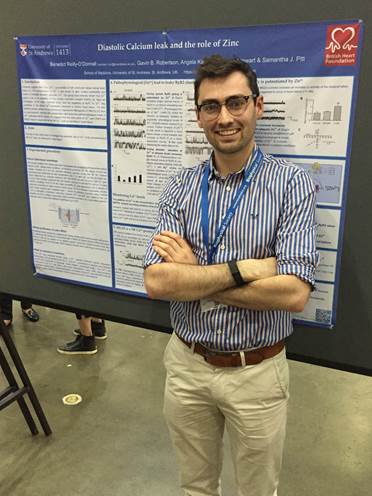
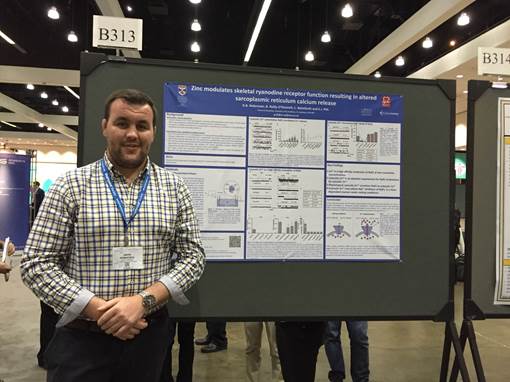
The Pitt lab attended the Biophysical Society 60th Annual Meeting, Los Angeles, Feb 27-March 2, 2016. Both Gavin Robertson and Benedict Reilly-O’Donnell presented their work. Gavin’s poster was entitled ‘Zinc modulates skeletal ryanodine receptor function resulting in altered sarcoplasmic reticulum calcium release’. Gavin is funded by the BHF. Ben presented a poster entitled ‘Diastolic calcium leak and the role of zinc’. Both Gavin and Ben received a travel award from the Physiological Society. Ben also received additional support from the British Society of Cell Biology. The conference was both helpful and informative and we look forward to presenting more data in the future.

Ben posterGavin poster

Is eye research the best kept secret?

In a recent article published in the RNIB (Royal National Institute of Blind People) magazine Julian Jackson, a Senior Adviser at Fight for Sight, argues that scientists working in the field of vision research need to better communicate the work they do to eye health professionals, patients and the public. A link to the article can be found here.

To help to address this Fight for Sight have established a Speaker Network, made up of over 100 academic researchers, clinician scientists and clinicians offering a wide range of expertise and experience. The aim of the network is to target large annual conferences, AGM’s and key optical events as well as regional and local meetings to ensure maximum reach and penetration of the charity’s message about the critical importance of eye research.